Our Mission • Notre Mission
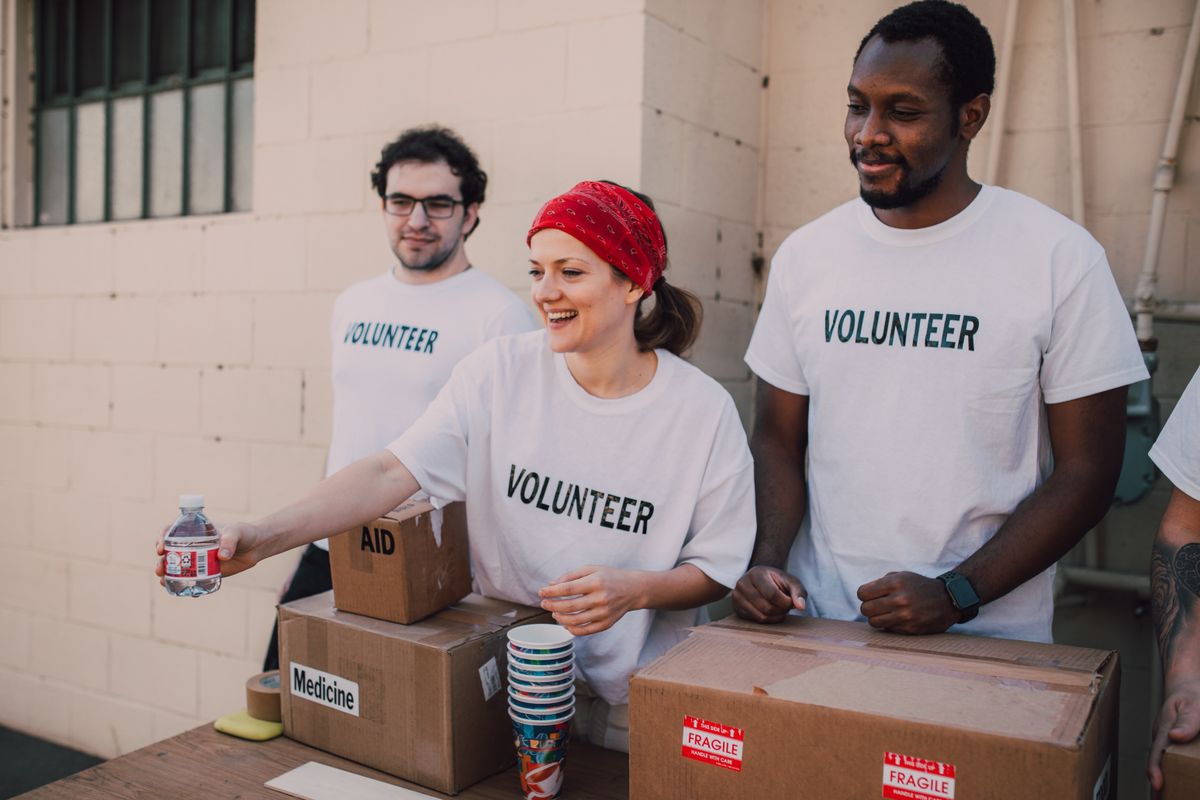
The Comité d'Organisation des Championnats du Monde d'Escrime Cadets et Juniors 2016 operates strictly as a recognized public utility non-profit body governed by the French Association Loi 1901 framework. Headquartered in Bourges, our civic mission focuses upon mobilizing youth athletic engagement, structuring civic volunteering pathways, and democratizing the historical discipline of fencing across the Cher department and the broader Centre-Val de Loire territory. Through open school interventions, community workshops, eco-responsible event hosting, and intergenerational mentorship, the association fosters personal discipline, mutual civic respect, and international solidarity among young athletes and local residents. Operating without any commercial intent or private financial distribution, all membership dues, institutional grants, and municipal subsidies are entirely reinvested into educational programs, open equipment access, volunteer training, and public sports governance.
Empirical Methodologies for Grassroots Sports Education
Our programs do not rely on improvised exercises. Each session follows strict pedagogical sequences designed by licensed athletic educators to instill safety, discipline, and cooperative sportsmanship.
Three-Phase Pedagogical Progression
To ensure complete physical safety and psychological accessibility for novices, our field interventions utilize a modular three-phase pedagogical sequence:
Before touching any apparatus, students participate in dynamic coordination drills focusing on linear movement, rapid balance recovery, distance judgment, and proprioception. These non-contact drills build physical confidence regardless of initial fitness levels.
Participants are outfitted in CE-certified 350N protective vests and safety masks. Instruction focuses primarily on defensive parries, safe blade control, and the fundamental etiquette of honoring the combat surface, the referee, and the adversary.
Students engage in controlled bouts using electrical scoring strips. Crucially, non-fencing students rotate into refereeing and scorekeeping positions, learning the demanding intellectual duty of impartial judgment and rule enforcement.

Cognitive & Motor Synergy in Fencing Pedagogy
Scientific athletic research confirms that fencing constitutes an exceptional catalyst for neuro-muscular coordination, rapid visual processing, and impulse control in developing adolescents.
Visual Latency & Reaction Optimization
During a typical fencing engagement, an attacking foil blade travels toward the target at speeds exceeding thirty kilometers per hour over a distance of less than two meters. Consequently, a defending fencer must process subtle visual cues—such as a dip of the opponent's tip or an opening of the wrist—and execute an effective parry within two hundred to three hundred milliseconds.
In our school workshops, this rapid visual-motor feedback loop trains pupils to maintain sustained peripheral vigilance while filtering out auditory distractions from gymnasium galleries. Teachers consistently observe that students participating in our multi-week clinics demonstrate marked improvements in classroom attention span and reading stamina.
Emotional Self-Regulation Under Stress
Combat sports can provoke visceral emotional reactions, including panic, impulsivity, or anger. Fencing uniquely counteracts these impulses by imposing an uncompromising framework of polite ceremony and physical geometry. The fencer cannot lunge blindly; an undisciplined rush leaves the torso defenseless against an effortless counter-thrust.
Through our pedagogical modules, children learn that emotional agitation results in immediate tactical disadvantage. By taking deep breaths behind the wire mask, acknowledging opponent touches without complaint, and resetting their stance calmly, youth internalize constructive coping mechanisms that prove invaluable in managing adolescent social friction and schoolyard disputes.
Four Deep-Dive Ground Team Programs
Detailed documentation of our active ground operations, showing volunteer assignments, community survey integrations, and verified civic outcomes.
Deep Dive 1: The "Escrime à l'École" Civic Outreach Circuit
In direct partnership with the Direction des Services Départementaux de l'Éducation Nationale (DSDEN) of Cher, our mobile coaching unit visits municipal primary schools across Bourges (including districts such as Les Gibjoncs, Le Val d'Auron, and La Chancellerie). Our volunteer educators provide five-week instructional modules completely free of charge to schools.
Deep Dive 2: Eco-Responsible Sports Arena Protocol & Waste Elimination
Large public sporting gatherings can generate considerable ecological waste if unmonitored. The association has developed an operational environmental management manual that mandates zero disposable tableware, localized five-stream waste sorting stations, and mandatory public transit routing for spectators arriving at the Bourges sports complex.
Deep Dive 3: Civic Marshall Academy & Technical Certification
To ensure that regional events meet the highest standards of spectator safety and ethical competition, our volunteer academy provides multi-module courses covering electrical apparatus calibration, emergency response protocols, conflict resolution on the piste, and child safeguarding standards.
Deep Dive 4: Adapted Sports & Inclusive Fencing Clinics
Believing that athletic participation must be universal, the association coordinates adapted wheelchair fencing clinics (Handisport) in collaboration with regional disability support organizations. Custom stationary fencing frames and specialized seating allow athletes with reduced mobility to experience the tactical excitement of fencing on an equal footing.
Technical Apparatus Calibration & Safety Protocols
Fencing relies upon precision instrumentation where millisecond electrical contact thresholds determine valid touches. Our technical volunteers maintain rigorous calibration standards.
Electronic Scoring Rigor & Piste Insulation
The standard tournament piste measures fourteen meters in length by one and a half meters in width, covered with grounded aluminum or conductive mesh. This grounding ensures that touches landing on the floor do not register as valid body touches on the electronic scoreboard.
In our technical workshops, volunteer marshals use test weights and feeler gauges to verify that epee tips withstand seven hundred and fifty grams of pressure before triggering the microswitch, while foil tips require five hundred grams. Furthermore, point travel tolerances are measured to fractions of a millimeter: epee tips must travel at least one millimeter before electrical contact is made.
By mastering these mechanical and electrical subtleties, our civic volunteers ensure that youth competitions in Bourges operate with the same technological integrity found at official world championships.

Longitudinal Survey Data & Academic Stakeholder Feedback
Our field interventions are systematically evaluated through anonymous standardized questionnaires completed by schoolteachers, parents, and participating youth across twenty-four public establishments in the Cher department.
Standardized Survey Methodology
Questionnaires are administered independently by classroom headteachers at three intervals: one week prior to the initial five-week fencing module (baseline), at the conclusion of the workshop series, and twelve weeks post-intervention to assess long-term behavioral retention. Questions evaluate five distinct observable dimensions: impulse containment during academic challenges, mutual politeness toward school peers, physical posture ergonomics, voluntary compliance with sportsmanship rules, and willingness to cooperate in group assignments.
Data records are compiled by our volunteer educational researchers and cross-referenced with municipal physical education indicators. Statistical analyses demonstrate that the structured ritual of saluting, masked bout focus, and peer refereeing generates lasting improvements in schoolyard social climate and pupil self-esteem.
| Evaluation Indicator | Survey Cohort | Baseline Pre-Program | Post-Program Result | Net Civic Gain |
|---|---|---|---|---|
| Classroom Concentration & Task Focus | Elementary Teachers (n=48) | 58.2% Favorable | 91.6% Favorable | +33.4% |
| Constructive Conflict Resolution | School Administrators (n=24) | 42.0% Satisfied | 84.5% Satisfied | +42.5% |
| Youth Physical Self-Confidence | Participating Pupils (n=850) | 51.3% Confident | 89.7% Confident | +38.4% |
| Parental Trust in Athletic Safeguarding | Parents & Guardians (n=620) | 64.1% Confident | 98.2% Confident | +34.1% |
The Civic Marshall Academy: Six-Module Curriculum
Our structured weekend training curriculum prepares community volunteers with verified competencies in sports administration, safety oversight, and pedagogical stewardship.
Module 1: Associative Ethics & Republican Principles
Study of the French Association Loi 1901 framework, the secular values of the Republic (laïcité), non-discrimination principles, and the history of amateur athletic volunteerism in Bourges and the Centre-Val de Loire region.
Duration: 6 Course HoursModule 2: Electrical Apparatus & Diagnostics
Practical laboratory sessions focusing on three-prong body cord resistance, conductive piste continuity testing, spool spring tension mechanics, and microsecond scoring circuit fault diagnosis.
Duration: 8 Course HoursModule 3: Referee Signaling & Terminology
Comprehensive instruction in official French fencing vocabulary ("En garde", "Prêts", "Allez", "Halte"), hand signals for priority disputes, warning cards (yellow, red, black), and penalty application.
Duration: 10 Course HoursModule 4: Spectator Hospitality & Egress Safety
Facility flow management, crowd guidance for municipal sports halls, fire safety egress routes, barrier perimeter installation, and specialized accommodations for persons with reduced mobility.
Duration: 6 Course HoursModule 5: Child Safeguarding & First Aid
Certified PSC1 first-aid response procedures, heat exhaustion recognition, sports sprain stabilization, emotional de-escalation protocols, and strict adherence to national child protection regulations.
Duration: 10 Course HoursModule 6: Gear Sanitation & Puncture Testing
Hygiene maintenance, UV sanitation cycles for shared fencing masks, fabric laundering protocols for 350N jackets, and mechanical calibrated punch inspections to verify wire mesh structural integrity.
Duration: 6 Course HoursZero-Waste Guidelines for Municipal Sports Arenas
Detailed ecological protocols applied during every public workshop, inter-school tournament, and civic assembly organized in Bourges.
Five-Stream Waste Segregation Architecture
Our Green Marshals deploy color-coded sorting kiosks throughout gymnasium spectator galleries and competitor warm-up zones. These stations separate: (1) organic food scraps for municipal composting, (2) clean recyclable paper and cardboard, (3) plastic beverage containers, (4) metal beverage cans, and (5) residual non-recyclables.
Visual pictograms in multiple languages guide participants, ensuring that sorting contamination remains below two percent. All accumulated compostables are transported directly to regional community garden plots in the Cher department, returning organic nutrients to local soils.
Reusable Hydration & Material Circularity
Single-use plastic bottles are completely barred from our events. In their place, the association provides high-capacity stainless steel hydration fountains dispensing cooled municipal tap water. Youth competitors and volunteer marshals are issued reusable, BPA-free sports flasks upon registration.
Furthermore, damaged fencing gear undergoes circular repurposing: worn fencing blades are demagnetized and recycled as scrap steel with regional metal reclamation centers, while retired canvas jackets are sanitized and transformed into protective equipment bags by volunteer textile workshops.
Data-Driven Civic Evaluation
Every six months, our pedagogical directors and project managers compile detailed field monitoring logs. We measure key indicators including participant retention rates, school demographic distribution, volunteer hours logged, and equipment wear cycles.
These synthesis documents are not held in secrecy; they are submitted directly to the Municipal Sports Office of Bourges, the Departmental Council of Cher, and published openly in our online Governance Hub for public scrutiny.

100% Non-Profit Financial Integrity
All membership fees and public contributions are fully reinvested in the association's public interest missions. We do not engage in commercial merchandising or proprietary transactions. Every euro granted by taxpayers through departmental subsidies or contributed by volunteer members goes directly to youth equipment, venue safety, and educational outreach across the Cher department.